
Rules of email etiquette
You want to arrive at least 20 minutes early so you can check in, stretch, get loose, and hit some range balls. And even if you “Don’t want to waste all of your shots” on the range”, you should at least hit some putts and chips https://betsoft-software.com/. There isn’t much worse than stepping up to the first tee cold and the first green trying to guess the speed.
Now that the Rules of Golf allow you to leave the flagstick in the cup, you don’t always need to pull it while putting. It’s become a preference one way or another for most players. Still, if you do pull it, lay it down on the green where it doesn’t interfere with play. Also golf etiquette generally calls for the first player to putt out to grab the flagstick and return it to the cup when everyone finishes on the green.
If you’re someone who’s been playing golf a while, you know there isn’t much worse than having to deal with poor golf etiquette. It’s one thing to play with someone who’s a brand new golfer but it’s entirely different to play with someone who should know better.
Speaking of talking on the course, another piece of golf etiquette for dummies is to only talk to your golf ball. There is nothing worse than someone saying talking to your golf shot. I hate hearing other golfers say things like “Stay out of the water” or even worse “Great putt” about your shot before it actually went in.
Rules of fence etiquette
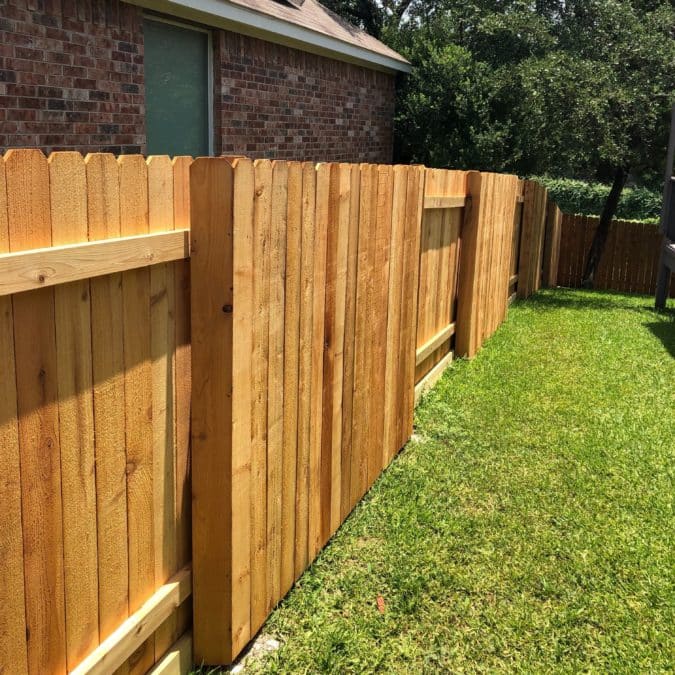
The rule of fence etiquette is to always know what you’re talking about. That starts with knowing your property lines: If the fence was already in place when you bought the house, you probably have no idea if it’s on your property, your neighbor’s, or on the line itself. If it’s entirely on your property, it’s your fence and vice versa. If it’s literally on the boundary line, it’s a boundary fence and your local area may have specific laws governing how that’s handled. If you’re not sure of your property lines, you might need to have a land survey done to establish them, which can cost anywhere from around $400 to $750. This can also be helpful to define your responsibilities concerning stuff that hangs over the fence, like tree branches that intrude into your property’s airspace.
Construction – Projects that will require large trucks, tractors, or other heavy equipment should be mentioned politely. If you’re throwing a large party where guests will be parking down the block, you can (and should) also handle it similarly.
That’s why practicing proper fence etiquette is vital. A fence can literally form the edge where two lives rub up against each other, and it can be a source of friction if you’re not careful. And since fence ownership and rights can be vague and complicated, it’s in everyone’s best interests to follow a few simple rules to ensure that minor fencing disputes don’t grow into major problems.
The rule of fence etiquette is to always know what you’re talking about. That starts with knowing your property lines: If the fence was already in place when you bought the house, you probably have no idea if it’s on your property, your neighbor’s, or on the line itself. If it’s entirely on your property, it’s your fence and vice versa. If it’s literally on the boundary line, it’s a boundary fence and your local area may have specific laws governing how that’s handled. If you’re not sure of your property lines, you might need to have a land survey done to establish them, which can cost anywhere from around $400 to $750. This can also be helpful to define your responsibilities concerning stuff that hangs over the fence, like tree branches that intrude into your property’s airspace.
Construction – Projects that will require large trucks, tractors, or other heavy equipment should be mentioned politely. If you’re throwing a large party where guests will be parking down the block, you can (and should) also handle it similarly.
Rules of meeting etiquette
If something does catch you off guard, don’t panic. Rather than stumbling through a response that makes no sense, let them know that you don’t know the answer at the moment but that you’ll research and get back to them.
Ask a question when it’s vital for clarification of the whole team, or if people generally seem confused. If you have a particular question about a point of interest, save it for the end or for that person to discuss one one-on-one. A good rule of thumb is to ask yourself, «Does everyone need this answered?» before raising your hand.
To avoid such embarrassing moments, follow this important rule of virtual meeting etiquette: Start up your video software a few minutes before the meeting to check your settings and make sure everything is working correctly. Set your background, test your microphone and video, and correct any issues so you’re able to actively participate when the meeting starts.
More than half of the meetings are just mundane work obligations that are not conceived as a conversation about finishing the project, but as that boring lesson that you sat through back in school days.


